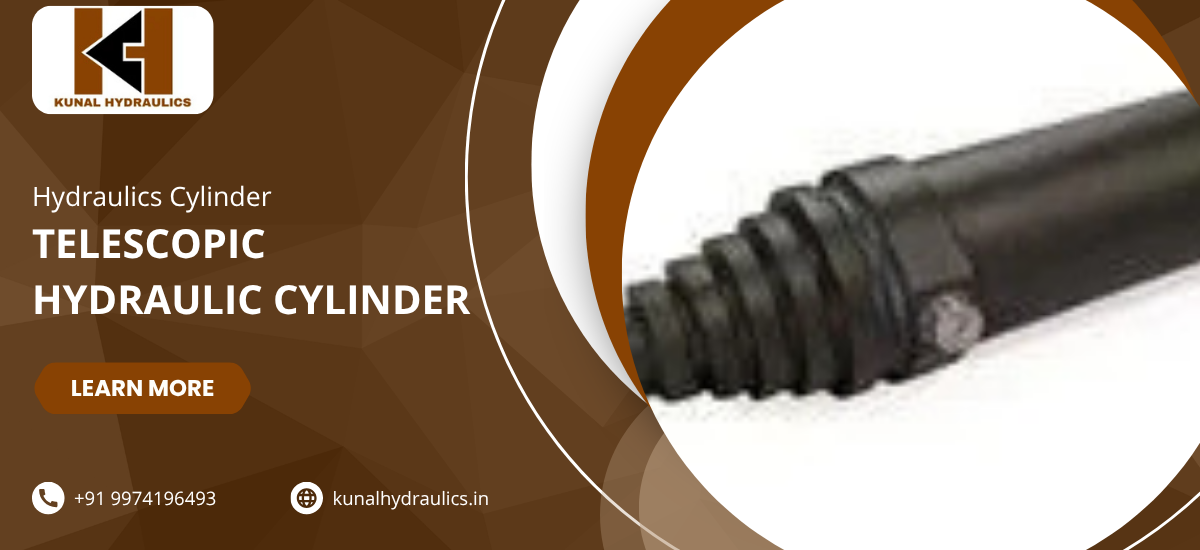
What Is a Telescopic Hydraulic Cylinder?
A telescopic hydraulic cylinder is a type of hydraulic cylinder designed with multiple nested stages. These stages extend one after another to provide a longer overall stroke while keeping the retracted cylinder length comparatively compact.
This design is useful in equipment where the required extension distance is greater than the available installation space for a conventional single-stage cylinder. The exact configuration depends on the machine’s design and operating requirements.
How Does a Telescopic Hydraulic Cylinder Work?
A telescopic hydraulic cylinder contains multiple nested sections, commonly called stages. When hydraulic pressure is supplied, the stages extend according to the cylinder’s internal design. During retraction, the stages return into one another.
The number of stages and their dimensions determine the overall extension and retracted length. The operating sequence depends on the cylinder configuration and hydraulic arrangement.
Understanding the Main Components
1. Outer Barrel
The outer barrel forms the main external body of the cylinder. It houses the nested stages when the cylinder is retracted and provides the structural arrangement for the telescopic assembly.
2. Nested Stages
The nested stages are the sections arranged inside one another. They extend in sequence to provide the required movement. The number and dimensions of these stages depend on the cylinder design.
3. Piston and Sealing Arrangements
Sealing components help maintain the required hydraulic separation within the cylinder assembly. Their condition is important for the cylinder’s operation. The specific sealing arrangement depends on the cylinder design.
4. Hydraulic Connections
Hydraulic connections allow the cylinder to receive and release hydraulic fluid according to its operating arrangement. Connection details should be checked when selecting a replacement cylinder.
Important Factors When Selecting a Telescopic Hydraulic Cylinder
1. Required Stroke Length
The required stroke is one of the most important considerations. Since a telescopic cylinder has multiple extending stages, the total extension should match the movement required by the equipment.
2. Retracted Length
The retracted length determines the space required when the cylinder is fully closed. Check the available installation space and compare it with the cylinder’s dimensions before selecting a product.
3. Number of Stages
The number of stages affects the cylinder’s overall configuration and extension. The required arrangement should be determined according to the equipment’s movement and installation requirements.
4. Operating Pressure
The hydraulic system’s operating pressure must be considered during product selection. Confirm the required pressure from the machine documentation and ensure that the selected cylinder is suitable for the specified working conditions.
5. Mounting and Connection Details
Review the cylinder’s mounting arrangement and hydraulic connections. These details are particularly important when replacing an existing telescopic cylinder because the replacement must match the equipment’s installation requirements.
Where Are Telescopic Hydraulic Cylinders Used?
Telescopic hydraulic cylinders are suitable for equipment designs that require a long extension from a comparatively compact retracted arrangement. Their suitability depends on the machine’s mechanical design, load requirements and hydraulic system.
Before choosing a cylinder for any equipment, confirm the application details and technical specifications with the equipment manufacturer or a qualified hydraulic professional.
Inspection and Maintenance Considerations
Because telescopic cylinders contain multiple moving stages, inspection should consider the complete assembly rather than only its outer surface. Visible oil leakage, irregular extension or retraction, unusual movement and damage to exposed sections may indicate that the cylinder requires attention.
During inspection, qualified maintenance personnel may check:
- Visible leakage around the cylinder stages and connections.
- Condition of exposed surfaces and cylinder sections.
- Extension and retraction movement.
- Mounting points and hydraulic connections.
- Available product identification and technical details.
Always follow the equipment manufacturer’s safety instructions and release stored hydraulic pressure before carrying out maintenance work.
Telescopic Hydraulic Spare Parts and Replacement
When sourcing Telescopic Hydraulic Spare Parts, identifying the exact cylinder configuration is important. Different telescopic cylinders may have different stage arrangements, dimensions and component requirements.
Before contacting a supplier, prepare the following information:
- Existing cylinder model or identification details.
- Number of stages.
- Required stroke and retracted length.
- Available cylinder dimensions.
- Mounting and hydraulic connection details.
- Photographs or technical drawings of the existing assembly.
Accurate information helps the supplier understand the requirement and discuss the relevant replacement components.
Choosing a Telescopic Hydraulic Cylinder Manufacturer
When comparing a Telescopic Hydraulic Cylinder Manufacturer, consider the actual requirements of the equipment. The number of stages, total stroke, retracted length, operating pressure and mounting arrangement should be reviewed before selecting a cylinder.
Businesses looking for a Telescopic Hydraulic Cylinder Supplier should share the available technical information and confirm compatibility before placing an order. This is especially important when replacing an existing multi-stage cylinder.
Finding a Telescopic Hydraulic Cylinder Manufacturer in India
Businesses searching for a Telescopic Hydraulic Cylinder Manufacturer in India should prepare the relevant machine and cylinder specifications before making an enquiry. Technical drawings, photographs and accurate measurements can help communicate the requirement more clearly.
Kunal Hydraulics offers hydraulic cylinder products for industrial requirements. Visit the Telescopic Hydraulic Cylinder product page to review the available product information.
You can also explore the Hydraulic Cylinder category to view other cylinder products.
Frequently Asked Questions
What is the main advantage of a telescopic hydraulic cylinder?
Its multi-stage design provides a longer extension while maintaining a comparatively compact retracted length.
How many stages can a telescopic hydraulic cylinder have?
The number of stages depends on the cylinder design and the movement requirements of the equipment.
What details are needed to select a telescopic hydraulic cylinder?
Important details include the required stroke, retracted length, number of stages, operating pressure, mounting arrangement and hydraulic connections.
What should I check before ordering telescopic hydraulic spare parts?
Identify the cylinder configuration, number of stages, dimensions and exact component required. Photographs and technical drawings can help clarify the requirement.
Discuss Your Telescopic Hydraulic Cylinder Requirement
Selecting a suitable telescopic hydraulic cylinder requires an understanding of the equipment’s available space, required extension and hydraulic system. Confirming the technical details before ordering can help avoid compatibility issues.
Explore hydraulic cylinder products at Kunal Hydraulics or visit the Contact Us page to discuss your requirement.