Introduction
Modern manufacturing industries require machinery that can deliver consistent force, precise control, and high productivity while minimizing manual effort. An Electric Hydraulic Press fulfills these requirements by combining the immense force of hydraulic technology with the convenience and efficiency of electric power systems.
From metal fabrication and automotive manufacturing to molding, assembly, punching, and forming operations, electric hydraulic presses have become an essential part of industrial production facilities. Their ability to generate high pressure with controlled operation makes them one of the most versatile machines used across multiple industries today. Electric hydraulic presses are commonly available in various capacities ranging from small workshop models to heavy-duty industrial presses exceeding several hundred tons.
What is an Electric Hydraulic Press?
An Electric Hydraulic Press is a machine that uses an electrically powered hydraulic system to generate compressive force for industrial applications. The machine operates through an electric motor that drives a hydraulic pump, which creates hydraulic pressure inside the system.
This hydraulic pressure is then transferred to a hydraulic cylinder, producing powerful and controlled pressing force capable of handling demanding industrial tasks. Electric hydraulic presses are widely used for:
- Metal forming
- Stamping
- Bending
- Punching
- Deep drawing
- Press fitting
- Assembly operations
- Molding applications
- Component straightening
Their versatility makes them suitable for both small-scale workshops and large manufacturing plants.
How Does an Electric Hydraulic Press Work?
The working principle is based on hydraulic force generation through electrically powered components.
Step 1: Electric Motor Activation
The electric motor drives the hydraulic pump.
Step 2: Hydraulic Pressure Generation
The pump transfers hydraulic oil under pressure through the system.
Step 3: Cylinder Movement
Pressurized oil enters the hydraulic cylinder, causing the piston to move.
Step 4: Force Application
The piston delivers controlled compressive force to the workpiece.
Step 5: Return Cycle
After completing the operation, the ram returns to its original position, ready for the next cycle.
This mechanism enables smooth, repeatable, and highly accurate pressing operations.
Major Components of an Electric Hydraulic Press
Hydraulic Cylinder
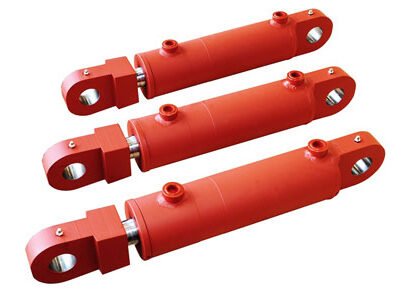
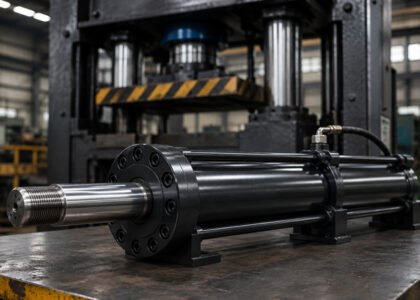
The cylinder converts hydraulic pressure into mechanical force and serves as the heart of the press system. High-quality hydraulic cylinders are designed for continuous high-pressure operations and heavy industrial workloads.
Electric Motor
Provides power to the hydraulic pump and ensures efficient machine operation.
Hydraulic Power Pack
Supplies pressurized hydraulic fluid throughout the system.
Control Panel
Allows operators to control pressure, stroke length, cycle time, and operational settings.
Press Frame
Provides structural support and stability during high-load operations.
Hydraulic Valves
Regulate oil flow and maintain precise pressure control.
Key Features of Electric Hydraulic Presses
High Force Generation
Electric hydraulic presses can generate enormous pressing force while maintaining precise control.
Smooth Operation
Hydraulic systems ensure vibration-free and consistent performance.
Adjustable Pressure Settings
Operators can customize pressure levels according to application requirements.
Accurate Stroke Control
Enables precise positioning and repeatability during production.
Energy Efficient Performance
Modern electric hydraulic systems consume less energy while delivering higher productivity.
Low Maintenance Requirements
Fewer moving components reduce wear and maintenance costs.
Enhanced Safety
Many machines include overload protection, emergency stop systems, and safety guards.
Types of Electric Hydraulic Presses
Different industries require different press configurations.
H Frame Electric Hydraulic Press
Designed for heavy-duty industrial applications requiring high force and structural stability.
C Frame Electric Hydraulic Press
Provides easy access to the work area and is ideal for assembly and light forming operations.
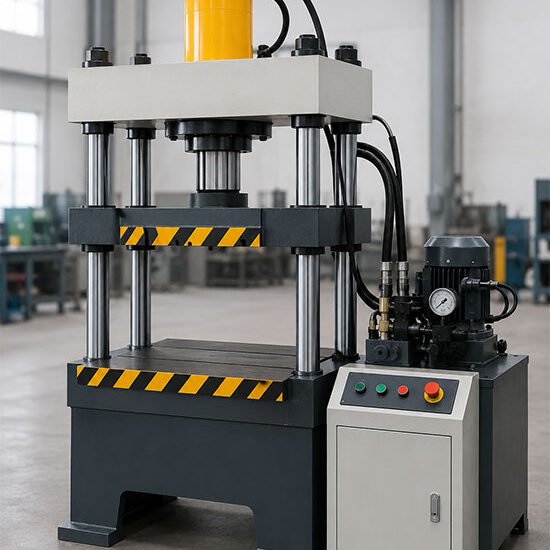
Four Column Hydraulic Press
Offers excellent load distribution and precise alignment, making it suitable for molding and large workpieces.
Deep Drawing Hydraulic Press
Used for shaping sheet metal into complex forms.
Custom Hydraulic Press
Engineered according to specific customer requirements and production processes.
Applications of Electric Hydraulic Presses
Metal Fabrication Industry
Used for:
- Punching
- Bending
- Forming
- Deep drawing
- Stamping
Aerospace Industry
Provides precise forming and shaping of high-performance components.
Plastic and Rubber Industry
Used in molding and compression applications.
Automotive Industry
Suitable for:
- Component assembly
- Bearing installation
- Bush fitting
- Chassis part manufacturing
Electrical Industry
Suitable for assembling electrical components and housings.
Heavy Engineering Industry
Supports large-scale manufacturing and fabrication operations.
Advantages of Electric Hydraulic Presses
Increased Productivity
Faster cycle times help manufacturers increase output.
Better Precision
Controlled hydraulic force ensures consistent product quality.
Reduced Labor Effort
Automated operation minimizes manual intervention.
High Reliability
Robust construction ensures long service life.
Versatility
A single machine can perform multiple manufacturing operations.
Cost Savings
Reduced scrap generation and improved operational efficiency lower production costs.
Why Industries Prefer Electric Hydraulic Presses
Modern manufacturing facilities prioritize efficiency, accuracy, and operational flexibility. Electric hydraulic presses provide:
- Consistent force output
- Accurate pressure control
- Flexible production capabilities
- Reduced downtime
- Improved operator safety
- Higher production rates
These advantages make them one of the most preferred industrial pressing solutions available today.
Why Choose Kunal Hydraulics?
Kunal Hydraulics is a leading manufacturer of hydraulic cylinders, hydraulic presses, power packs, C-frame presses, H-frame presses, and customized hydraulic solutions. Established in 2012, the company has built a strong reputation for delivering robust, reliable, and precision-engineered hydraulic equipment for diverse industrial applications. Their product range includes hydraulic presses in multiple capacities, customized hydraulic cylinders, and industrial hydraulic systems designed for high performance and long service life.
Conclusion
An Electric Hydraulic Press is an indispensable machine for industries that require controlled force, precision, and high productivity. Its ability to combine hydraulic power with electric efficiency makes it suitable for a wide range of manufacturing and fabrication applications.
Whether used for metal forming, assembly, molding, punching, or industrial processing, electric hydraulic presses continue to help manufacturers improve productivity, reduce operational costs, and achieve superior production quality. Investing in a high-quality electric hydraulic press is a strategic decision that delivers long-term value and operational excellence.